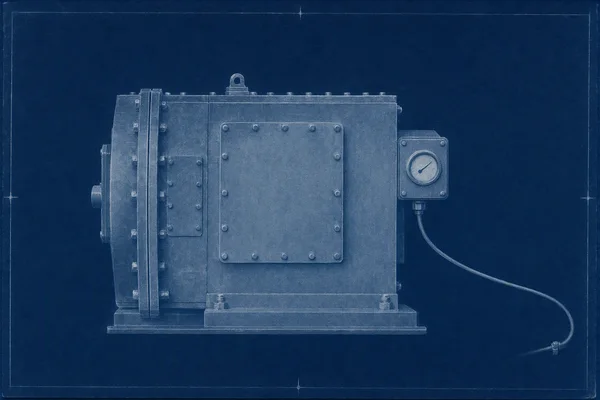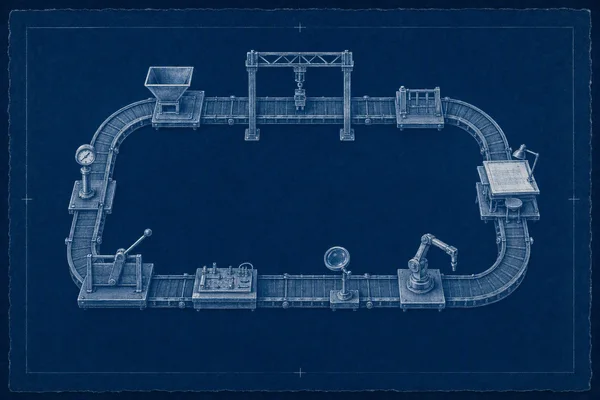
How to build an agent factory, stage by stage
An agent factory is the old development lifecycle closed into a loop. Each stage, why it exists, what breaks without it, and which one to build first.
- agent factories
- control loops
- SDLC
Notes from a research programme on the autonomous enterprise: accountability, decision records, boundaries, the off switch and why a machine cannot own anything.
An agent factory is the old development lifecycle closed into a loop. Each stage, why it exists, what breaks without it, and which one to build first.
The valuable part of an agent factory is not the model but what it learns about your firm. Before choosing a vendor, check what stays yours when you leave.
Software teams now run work as a loop of agents with people at the decision points. Finance, purchasing and marketing come next, on one condition.
NVIDIA's new agent security design puts the monitor on a separate processor, outside the host. It is the industrial form of an off switch the system cannot reach.
An audit assumes a stable object. A self-improving system has changed by the time the report is written, so the audit has to move from behaviour to invariants.
A loop that can buy, rent compute and pay suppliers needs a spending bound it cannot edit. The budget is the first constraint an owner can actually read.
Most systems keep logs for an engineer on call tonight. An autonomous one needs a record that a stranger can replay a year later, and that is a different design.
The third loop of an autonomous operation changes its own configuration to do better. Who defines better, and where that definition lives, decides if it works.
Giving a system more autonomy is mostly a decision about what it is forbidden to do and who enforces that. A boundary the loop can edit is only a suggestion.
Extending an autonomous loop from records to machines turns wrong data into moving mass, and the safety case has to be written before the loop is connected.
Studying economic behaviour without real counterparties is the only defensible option today. It pays to be exact about what that leaves untested.
Most automation programmes stop at the same place, and it is not a technical boundary. Somebody has to be accountable, and accountability needs a person.
Bolting recovery onto a system that was designed to be repaired by people produces automation that fails in more interesting ways, not fewer.
Legal personhood for autonomous systems gets discussed as though it were arriving. It is not, and the reasons are more interesting than the proposals.
The interesting property of a stop is not that it exists. It is that the thing being stopped has no path to observe, delay or depend on it.
Biological language is useful for describing closed loops and self-repair, and it is the fastest route to claims nobody can support. Both are worth saying.